Showing posts with label the. Show all posts

Wednesday, October 21, 2020

The Philosophy of "The Dark Knight Returns"


“A few years back, I was reading a news magazine--a lot of people with a lot of evidence said that Roosevelt knew Pearl [Harbor] was going to be attacked--and that he let it happen. Wasn’t proven. Things like that never are. I couldn’t stop thinking how horrible that would be...and how Pearl was what got us off our duffs in time to stop the Axis...but a lot of innocent men died...but we won the war. 

It bounced back and forth in my head until I realized I couldn’t judge it. It was too big. He was too big...”

--Commissioner Gordon, The Dark Knight Returns


If you are unfamiliar with Frank Miller’s The Dark Knight Returns (TDKR), you’re still probably familiar with its iconography. Chris Nolan’s Dark Knight trilogy took a lot of inspiration from it as well as Batman v. Superman. Zack Snyder even announced the film by having an actor read a quote from TDKR. Unfortunately Zack Snyder’s vision lacked the depth of the comic that inspired it. 


**Full Spoilers Ahead**


Commissioner Gordon’s quote (at the top of the page) is an explanation on why Gordon has allowed Batman to exist for so long. “It was too big. He was too big.” It’s something I’ve been thinking a lot about lately, how people in power have to make impossible decisions, and sometimes people get hurt either way. Did President Truman do the right thing when he bombed Hiroshima and Nagasaki? It’s too big to judge. Is it right allowing Batman to take the law into his own hands. He’s too big.


Batman, breaking laws is nothing new, but is The Dark Knight Rises saying such behavior excusable?Sort of. Batman’s actions in TDKR allow him to recruit gang members, using them as a force for good during a nationwide blackout. This and other actions draw the attention of the US government. Who’s president sends Superman to intervene. The rhetoric used here isn't about the morality of Batman's actions. It is strictly about the public nature of them. Batman is helping Gotham, but it's an embarrassment to the rest of the United States.


“You’ve always had it wrong Bruce...giving them such a big target. Sure you play it mysterious--but it’s a loud kind of mysterious, man. Especially lately. . . . They’ve been covering for me, just like they covered up my escape. Sure, they’d love to frost me...long as they can do it without admitting I exist.”

--Green Arrow, Dark Knight Returns


Green Arrow’s beliefs are consistent with the behavior of the US government, in this comic. Superheroes are outlawed, yet they secretly keep Superman around for their dirty work. Green Arrow is allowed to operate as long as he keeps a low profile. Batman takes Green Arrow's advice and publicly fakes his death to continue fighting crime underground, and Superman allows this to happen. Superman didn't need to stop Batman. He only needed Batman to stop pissing off the President.
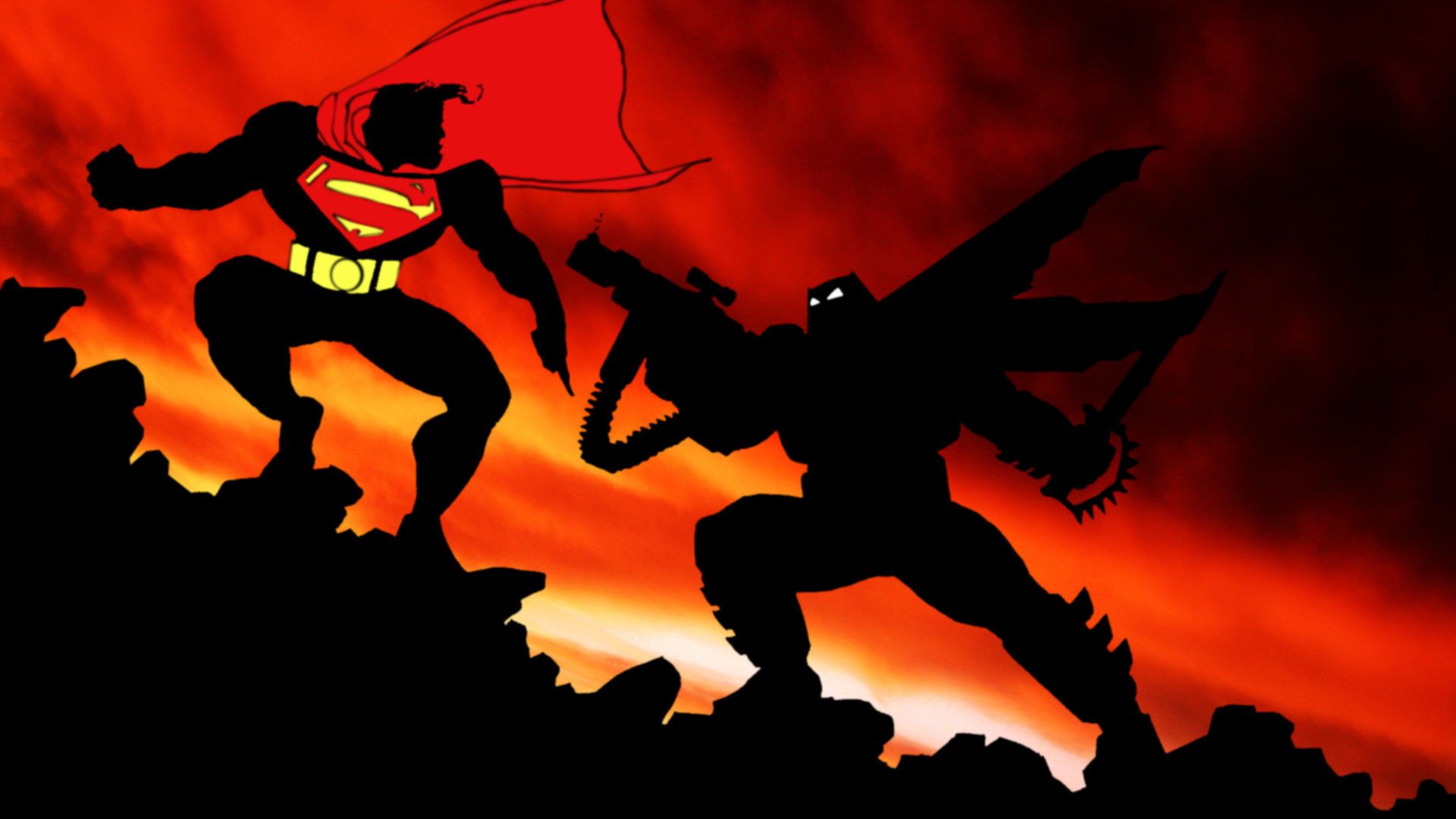

The Dark Knight Rises is an acknowledgement that people in power will bend and break moral principles when they deem necessary. More often than not they will hide those actions from the public eye. Maybe it's to avoid judgement. Maybe it’s too big to judge. 


If you enjoyed reading this, please consider sharing with a friend, reading about the philosophy of The Walking Dead, or following me on twitter @ChefCinephile. Comments and feedback are always appreciated.


Monday, October 12, 2020

The Truth Behind Invasion of the Body Snatchers

Imagine waking up one day, your child, spose, mother, and father--everyone you know replaced by identical copies. Only you know they are different, and no one will believe you. This is the plot of Jack Finley's 1954 novel The Body Snatchers. It’s also a real world psychological condition.


Body Snatchers (and the film Invasion of the body Snatchers) is about a town whose citizens systemically disappear before being replaced by identical pod people. These replicas have the same physical characteristics, personalities, and memories as their original recipe counterparts. Eventually the remaining humans find some significant differences and send those aliens packing in true post war fashion. In the beginning, however, the aliens mostly fit in. Only their loved ones could tell something was off.


In chapter one of the book, Doctor Miles is told Wilma believes her Uncle Ira has been replaced by an impostor. After confirming “Every little move, everything about him is exactly like Ira’s”, Doctor Miles decides to talk to Wilma herself. On page 19 Wilma explains:


“Miles, he looks, sounds, acts, and remembers exactly like Ira. On the outside. But inside he’s different. His responses aren’t emotionally right. ....there’s something missing, and the same thing is true of Aunt Aleda, lately.”


Wilma's story is a textbook example of the psychological disorder known as Capgras Syndrome. According to Healthline:


“Capgras syndrome is a psychological condition. It’s also known as “imposter syndrome” or “Capgras delusion.” People who experience this syndrome will have an irrational belief that someone they know or recognize has been replaced by an imposter. They may, for example, accuse a spouse of being an imposter of their actual spouse. This can be upsetting for both the person experiencing the delusion and the person who is accused of being an imposter.”


Unfortunately for Wilma, none of the doctors had heard about Capgras. One of them even suggested a good old fashioned bleeding might help her out.


Body Snatchers is a pretty terrible book, yet the description of what Wilma was going through is so spot on, one can only assume Jack Finley knew somebody afflicted with Capgras Syndrome. He probably had no idea what the cause of the delusion was, but was inspired to write a story where people really got replaced by impostors. Mental health awareness has come a long way since the 1950's, but we still aren't where we need to be. If you’re interested in learning more about Capgras Syndrome, please check out this TED talk. It's how I was originally able to learn about Capgras.


Thank you for reading. This is a new website so please consider sharing or telling a friend. If you enjoyed post this please check out my post on The Walking Dead


You can find me @ChefCinephile on twitter.


Wednesday, October 7, 2020

The Philosophy of "The Walking Dead" Comics

Having never gotten into The Walking Dead franchise previously, I decided to give the comics a read. Two weeks and 48 issues later, I really enjoy the series thus far. Surprisingly, to me, I found the comic isn’t actually about zombies. Sure, the zombies are there (in all their horrific glory), but the comic is about people reacting to a crisis situation. The zombies represent an ongoing threat. The continual pressure on the human characters forces them into a position where society can never be normal again. 


***FULL SPOILERS AHEAD FOR ISSUES 1-48 of A 20 YEAR OLD COMIC***

(But please give the comics a read, if you haven’t already)


Protagonist, Sheriff Rick Grimes begins the series as a very morally upright citizen of the law. He upholds human values as much as possible, and seems to believe people are basically good. He steals abandoned goods for survival, but would never do anything to harm a living person. Rick’s good nature almost cost him his life when his best friend Shane decided he needed Rick out of the way. Rick, never expecting his best friend to act that way, would have died if not for the intervention of his son. 


A few months later, the convicts decided Rick and his people needed to leave their prison, leaving the relative safety of the prison could mean death. When nearby undead cause a distraction, Rick sees his opportunity and kills the lead prisoner. A few months after that, Rick sneaks away from his tribe, runs over a man, and leaves him to be eaten. Again he acts with the intention of protecting his people, but this time, Rick doesn’t feel bad about it. This time the person he killed isn’t an ex con, but somebody trying to look after his own people. Both time’s Rick kills he lies about it, knowing the others wouldn’t be so quick to give up their morals. 


Rick Grimes, at the beginning of the story, represents the best humanity has to offer. His rapid corruption is a commentary on the dangers of power. Every time Rick makes a compromise, every time he does something morally questionable--he does it in the name of protecting his people, the greater good. Rick fully believes his behavior is necessary, but knows his friends wouldn’t be so convinced. He makes those hard decisions, often acting alone. All in the name of his people. 


The Governor, in The Walking Dead, exists as a dark reflection of Rick. The governor does many obviously evil things, and the Governor justifies his own actions. This is where Rick’s behavior ultimately leads. Being forced to make amoral decisions, wears a person down. Eventually anybody would lose sight over basic moral principles. 


If you believe the rapid fall of Rick is improbable, look no further than the Stanford Prison Experiment. This social experiment saw students randomly assigned to play the part of prisoner or guard in a mock prison. After only a few days the guards were horribly abusing the prisoners. Keep in mind, they weren’t real  prisoners or guards. They were all students from the same school. Afterwards, in an interview, the students who played the guard insisted they weren’t bad people. I believe they weren’t. Anybody who finds themself with unchecked power will too soon lose sight of morals. The prison experiment was abandoned after only 6 days. 


Nobody questions the Governor. His followers have a cult like belief in him and follow his every whim. Rick, on the other hand, has friends who keep him in check. When his friends find out that he murdered a prisoner, they quickly decide the weight of leadership is too much for one man, and they establish a committee. The committee seems to help him regain some of his humanity, but he still manages to run another man over. Perhaps, Rick Grimes is already too far gone. 


If you enjoyed reading this, please check out my article on Dead Space or Invasion of the Body Snatchers 

You can find me @ChefCinephile on twitter.